Orson on Books
and Trending Topics
← Opinion pieces
Opinion pieces

This year, Orson has chosen What Is Intelligence? (MIT Press, 2025) by Blaise Agüera y Arcas for the ambitious and idiosyncratic lens through which it approaches the nature of the AI already among us. Steering clear of both doom-laden narratives and technological triumphalism, Agüera y Arcas does not present artificial intelligence as a voluntary human wager but as a stage in a longer unfolding. Once resituated within the deep history of matter, life, intelligence, and technology, AI appears as a threshold phenomenon, a point of rupture from which a new social metabolism may begin to take shape.
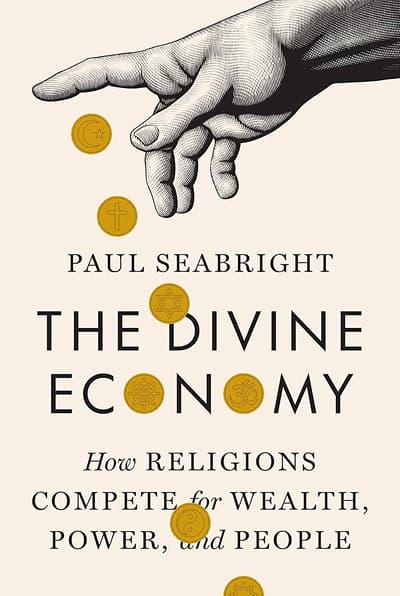
Orson has selected The Divine Economy: How Religions Compete for Wealth, Power and People (Princeton University Press, Princeton and Oxford, 2024) by Paul Seabright, professor at the Toulouse School of Economics, for its original contribution to the study of the persistence of religions in the modern world, as well as for its attentive and clear-sighted description of the strategic models these organizations deploy.
Five years ago, Donald Trump won the U.S. presidential elections, the Leave.EU campaign resulted in Brexit, and "post-truth" became the word of the year in 2016. In times of crisis, conspiracy theories flourish, and citizens are more distrustful than ever of shared horizons. In The Constitution of Knowledge: A Defense of Truth, American essayist Jonathan Rauch brilliantly demonstrates that reality not only demands honest minds capable of discovering it but also requires a community capable of mobilizing to acknowledge it.
Orson has chosen Ezra Klein's book, Why We're Polarized, published by Simon & Schuster in January 2020, for its sharp analysis of the polarization phenomenon at play in our societies. Last year, Jonathan Rauch provided an opportunity to demonstrate that the ideal of a "Constitution of Knowledge" should inspire elites. This year, Ezra Klein sheds light on the social mechanisms hindering a clear understanding of reality and urges us to overcome them. A cultural and institutional reform is now essential for achieving depolarization.
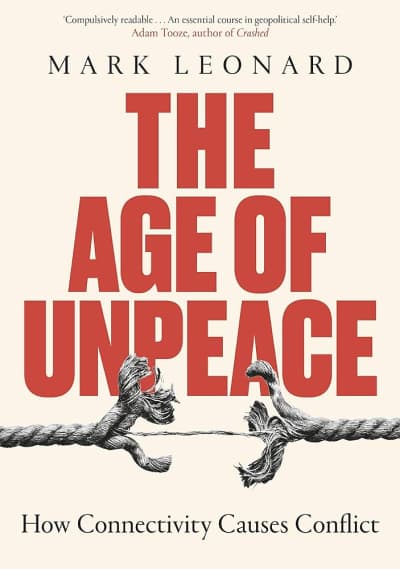
Orson has chosen The Age of Unpeace: How Connectivity Creates Conflict by Mark Leonard, published in 2021 by Bantam Press, for its insightful analysis of emerging forms of conflict in a world where boundaries appear increasingly narrow. The author paves the way for a resurgence of nuanced thought, urging elites to transcend the constraints of Cold War-era thought patterns and to forge a leadership suited to an era where connectivity is synonymous with hostility.
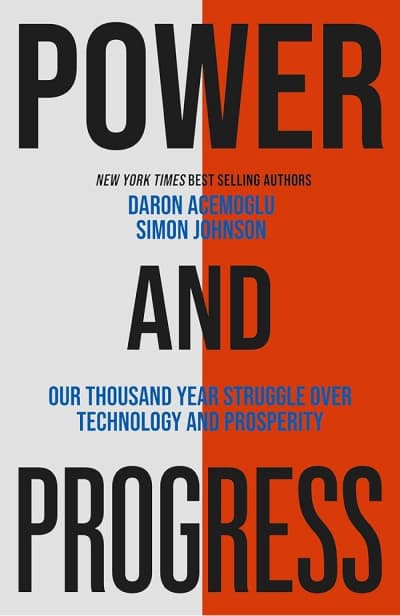
This year, Orson has chosen the book Power and Progress: Our Thousand-Year Struggle Over Technology and Prosperity by Daron Acemoglu and Simon Johnson published in 2023 by Basic Books, for its in-depth analysis of technological transition from economic, social, and political perspectives, as well as the best ways to harness these changes for the common good.